

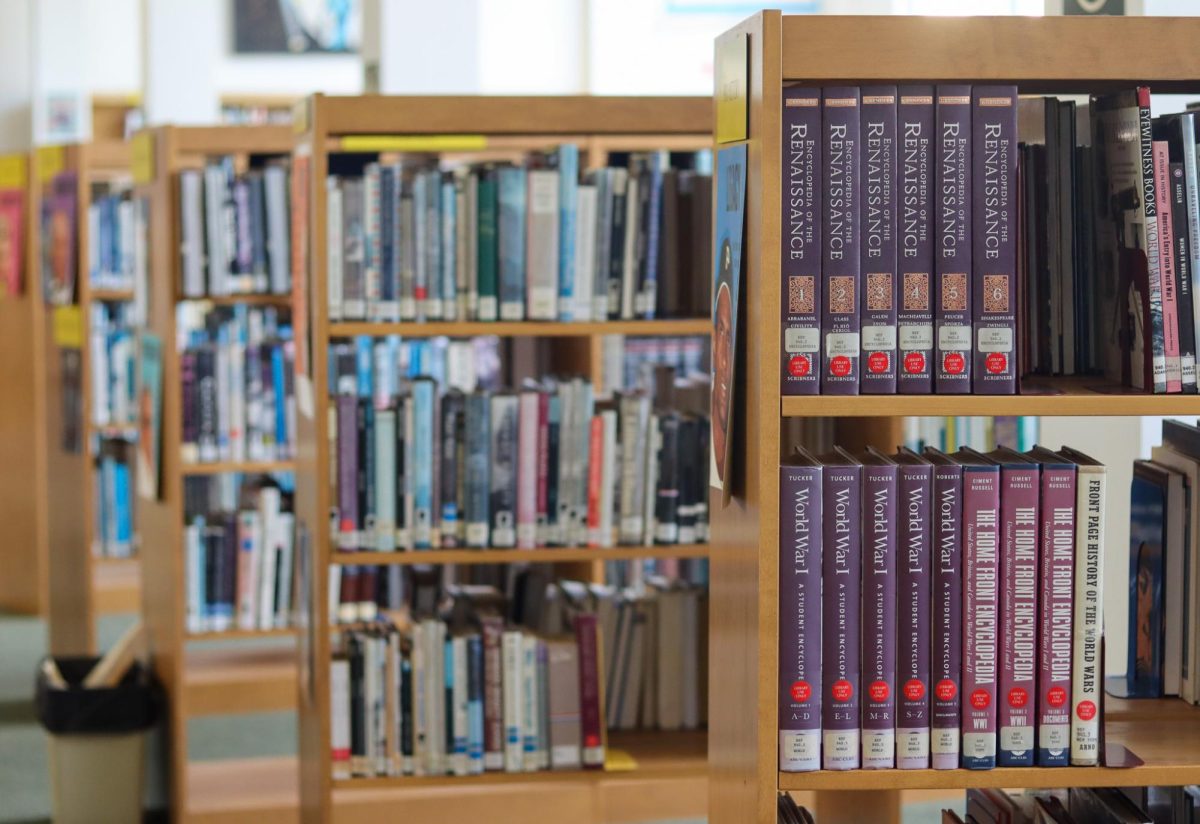
I’m not quite sure when everybody collectively stopped reading. In elementary school, I always felt like storytime in the library was the best part of the week; everybody would delight at learning that the crayons had ended their strike or groan when the mouse asked for yet another cookie. Of course, there were moments when nobody wanted to be there, and all anyone could think about was running around outside. Nevertheless, I was always under the impression that, ultimately, storytime was this magical and transformative time that, to some extent, we all enjoyed.
Again, I may just be superimposing my feelings onto the past, and storytime was actually a complete bore for everyone in my second-grade class besides myself. But I’m convinced that everyone has had a significant moment in their lives when reading felt like it meant something. When it added something valuable to their day or made them see the world in a new light, even if it wasn’t the single greatest moment of their life. So why hasn’t anyone stuck with it?
According to The Book Truck, a non-profit organization that engages in teen literacy outreach, 60 percent of American teens read below their grade level.
The most common reason adults cite for why young people should read is that lower literacy rates correlate with lower test scores. Down the line, lower test scores harm students’ future life choices, outcomes, and so on. But frankly, no one’s motivation for reading should be that it’ll improve their SAT score, or because they feel the need to do penance for spending too much time on social media. I do recognize the validity of those motivations, but why aren’t we talking about the simple fact that books make your life better?
Reading is a whole experience. It’s often inspiring, sometimes heartbreaking, and, ultimately, humanizing. Books are the quickest way to find out what it’s like to be a Turkish Harvard freshman struggling with first love and the realization that they may be doomed in their desired career (like in Elif Batuman’s “The Idiot”); to find yourself in a world where incarcerated people fight to the death in a televised gladiator-style arena in hopes of securing their freedom (like in Nana Kwame Adjei-Brenyah’s “Chain Gang All-Stars”); or to watch a wealthy WASP family tear themselves apart summer after summer on their private island in Martha’s Vineyard (like in E. Lockhart’s “Family of Liars”).
Globally, young people are struggling to find meaningful relationships, with so many aspects of communication having gone digital. After all, there’s a reason why some experts have labeled Gen Z the “loneliest generation.” Emotional connection and a sense of meaning are very much a present, pressing need amongst people my age: one that reading can help meet.
Reading a book is such a wonderful way to connect with others because it swings open a communal door to a shared space that doesn’t exist anywhere except on paper and in your imagination. No two people will ever experience a book exactly alike, including how all the characters look, or exactly why they exist, which is, quite honestly, one of the most fascinating things ever. It’s one thing to share an eight-second clip with your friend, but it’s entirely another matter to share a whole world with them.
Not only that, but if you don’t have a close relationship with someone you can share a book with, reading one in solitude can still carry its own weight. After all, it’s a powerful feeling to know that the author labored over what you’re holding in your hands, not for an algorithm but because it was important to them. Reading by yourself can give you a much deeper understanding of the lives around you and can be a really critical reminder of the beauty of being a human.
Ultimately, I’m not here to tell you to toss social media aside and upturn your entire life to read 50 books per year, but I sincerely hope that you consider reading at least one or two. There’s no pressure; you can read as much or as little as you want, and you shouldn’t need to force yourself to do it. The beauty of books is that they’re everywhere. If there isn’t a bookstore nearby, there’ll be a library, and if there isn’t a library, there’ll be a bookshelf or an old box tucked away in your attic. Just keep your eye out for a story that you think you might like to hear, and once you’ve found one, take a deep breath and start with the first page.




Lucas G • Feb 25, 2026 at 1:13 PM
Captivating arguments and stimulating writing. I feel like all throughout elementary school, we are constantly reading. Plus, we are rapidly improving in our level of understanding of deeper literature. I wonder when it is exactly we suddenly lose this skill. I myself feel like I simpley used to care more about books when I was younger than I do now. It could have been the lack of reading in middle school. Covid? maybe… Nevertheless, I feel that your article gave me hope for the literary prowess of the future.