

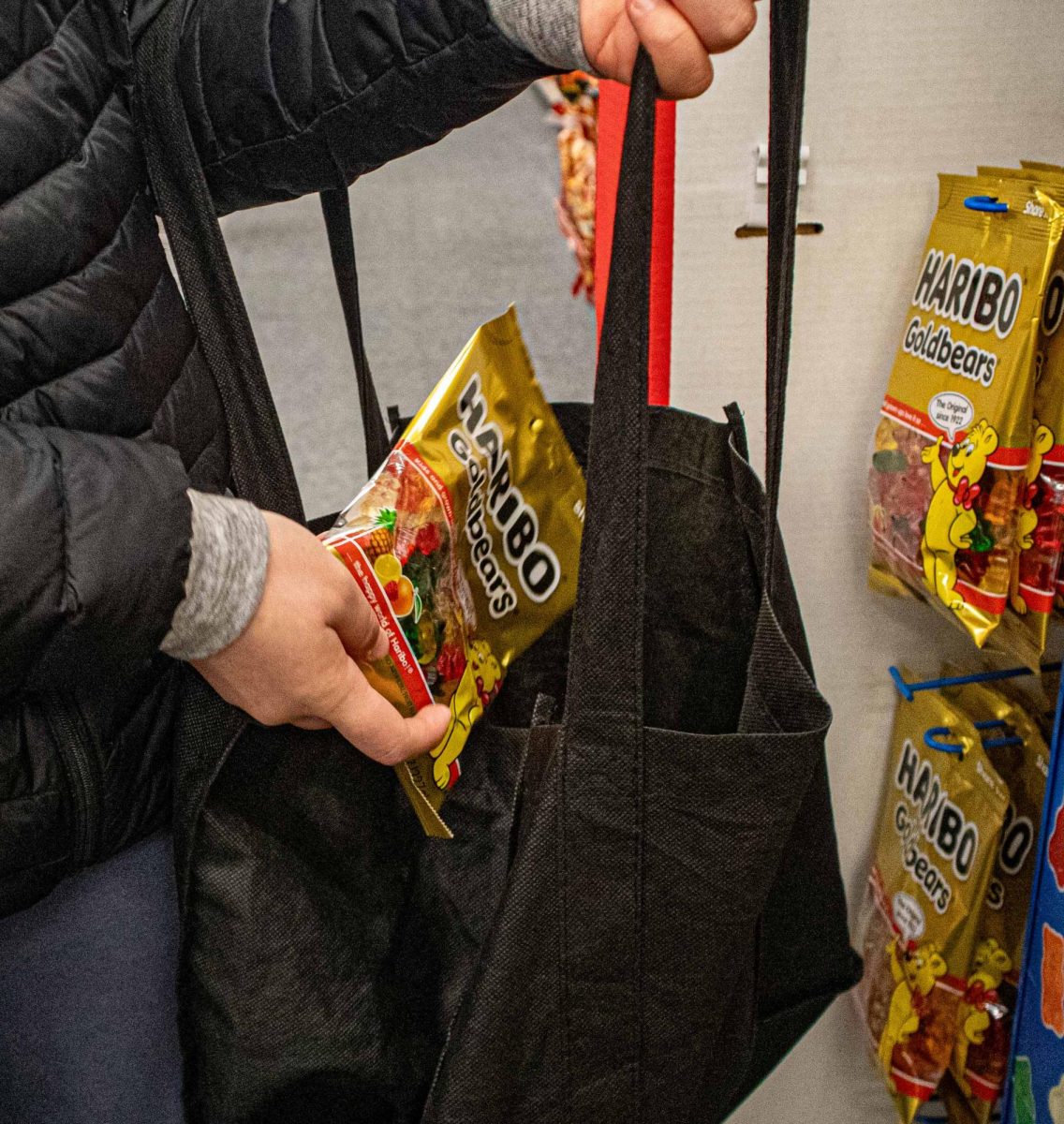
For many teens, shoplifting isn’t just a one-time mistake; it’s part of a growing issue that involves peer pressure, money, and poorly thought-through decisions. Stealing has become more normalized among high school students than most realize, with around 15 percent of high school students having stolen something in the past year according to the Journal of the American Academy of Psychiatry and the Law (JAAPL). This issue is prevalent in the Archie Williams student community, but multiple complex factors contribute to students’ decision to steal.
With more teens exhibiting this behavior not only minimizes its perceived risk, but also shifts how teens make sense of right and wrong, making it easier to overlook the broader consequences. An Archie Williams sophomore, who wishes to remain under the anonymous name “Sheryl” to protect their privacy adds her opinion to this controversy.
“I know a good amount of people who do [shoplift]. You see it happen so often, especially in high school, that the risk feels invisible,” Sheryl said.
According to Newport Academy, teens may steal due to the fact that their prefrontal cortexes are not fully developed, to distract themselves from painful emotions, or for the thrill of it, which can lead to conditions like kleptomania, an addiction to stealing. Archie Williams students are no exception, it is a real issue that teen circles normalize.
“I feel like there are a lot of reasons [why people steal]; it could just be peer pressure from friends or just from the adrenaline rush, and no particular reason. That’s just how teens are, but it could also be that kids think their parents won’t buy it for them, so they have to get it themselves, or they can’t afford it. It probably just seems more convenient to get stuff in the moment to them,” Sheryl said.
While it may seem more convenient to shoplift from stores than to pay for items, the practice’s effect on businesses is detrimental. Shoplifting has reached extreme levels, with retail losses skyrocketing to over 100 billion dollars in 2022, especially for big companies like Target. Sophomore Kael Dunnigan, an employee at Good Earth Natural Foods, has experienced the effects that stealing has in Marin.
“[Good Earth] is definitely affected negatively as [shoplifting] takes away from the total revenue we’re able to bring in,” Kael said. “Beyond the immediate loss, it creates an effect across the whole store that messes up the accounting and inventory levels.”
For teenagers, shoplifting can seem like a moment of poor judgment, but the consequences can be more serious than they expect. Besides the immediate embarrassment of being caught, stores may ban teens, and could contact their parents or law enforcement. These incidents can leave a lasting impact on a student’s record and reputation within their community.
“When someone is caught, the protocol is to bring them to the front for a confrontation. We ask them to return the items immediately, but the goal is often to have them pay for the merchandise they tried to take before they are told to leave,” Kael said.
Stores have a lot of different strategies, but most don’t chase people out of stores; they confront the perpetrator when they see theft. In stores like Sephora, security guards are on duty, but theft still occurs, leading to financial loss for the store. Carla Cadada is a Sephora employee who sees these results firsthand.
“Everything comes out of a budget at the end of the year, where we end up having enough for raises or just things. [The money] has to come from somewhere. The result is that brands will make their stuff more expensive for everybody else,” Cadada said.
Shoplifting may seem like just a quick, impulsive decision, but its consequences run deeper than that single action; moreover, there aren’t enough people attempting to stop this epidemic. It is a problem that negatively affects not only local businesses but also the wider community, and could get worse with time if nothing is done about it. The impact of teen shoplifting extends beyond financial losses, affecting businesses, the community, and the values and morals teens bring into adulthood.