

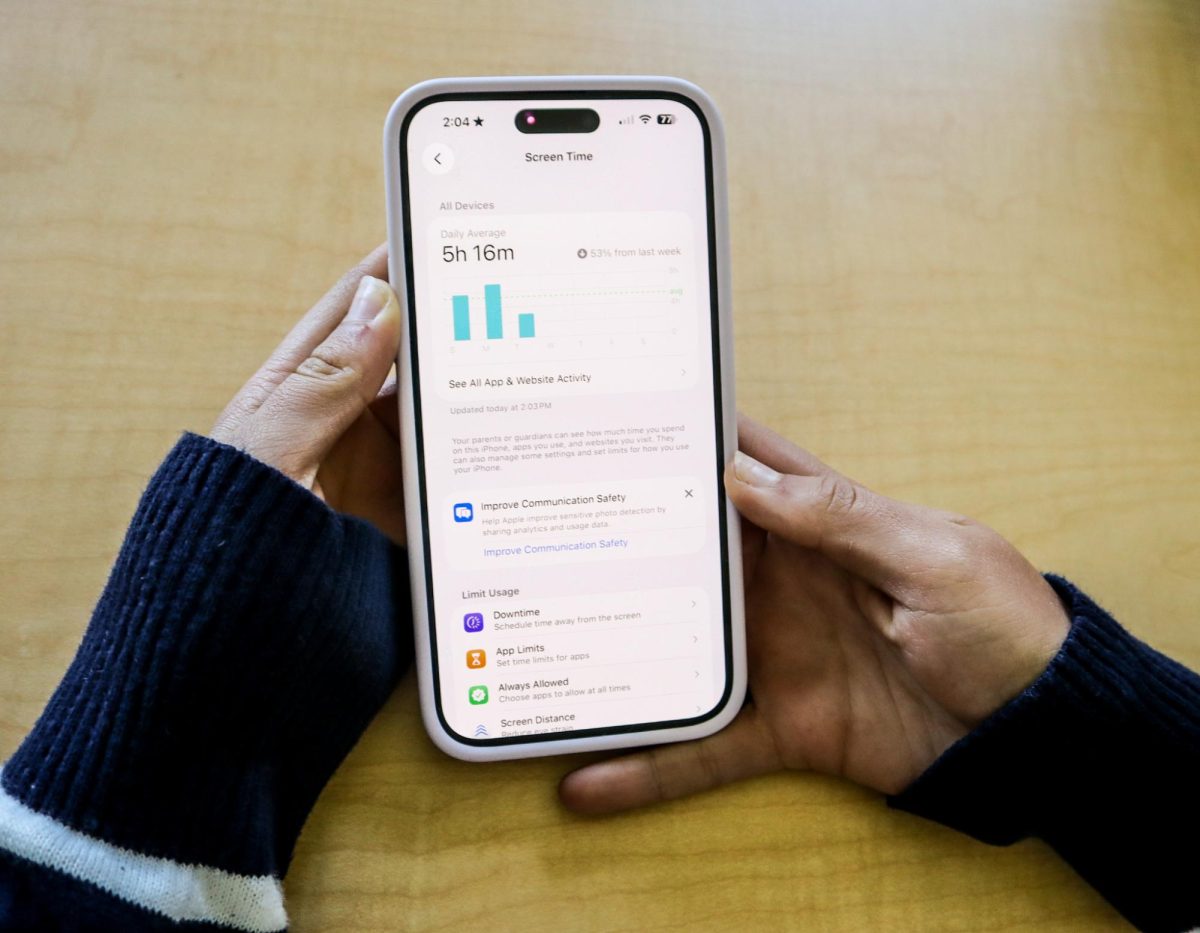
In a time when students spend large amounts of their days on devices, the long-term effects of high screen time are becoming harder to ignore. A survey by The Centers for Disease Control and Prevention reports the average screen time for individuals aged 15 to 18 is 7.5 hours per day. Excessive online usage is taking a toll on teenagers with psychological issues that can shape an individual’s quality of life and future, adding a dangerous addiction to daily life and overpowering personal creativity and attention span.
An article by Healthline documents that excessive screen time increases the risk of insomnia by 59 percent, and one hour of screen time results in 24 fewer minutes of sleep. High screen time and social media use before sleep suppresses the natural production of melatonin by emitting blue light, leading to less sleep and other significant health issues, such as negatively affecting the immune system. Freshman Layton Martin reflects on screen time affecting her sleep and states that screen time is a leading cause of poor sleep in youth.
“When I scroll before going to sleep, I don’t get good sleep at all. I keep telling myself ‘15 more minutes,’ and then it keeps extending. My friends tell me they experience the same thing too, where social media keeps them awake, even if there is something important the next day,” Layton said.
Social media poses a significant risk to addiction in adolescents and can result in high levels of screen time that degrade attention span and dopamine levels. Marin County Superintendent of Schools John Carroll highlights the correlation between addiction to social media and high usage of screen time.
“First thing in the morning, people look at their phone and see meaningless information because they want to have a quick feel-good. And by good, it could be reassuring them of something they already believe, or making them feel superior to someone else, or disgusted with somebody else’s behavior, so they feel superior, some kind of big fraud,” Carroll said
With devices ending up in the possession of younger children over each generation, screentime addiction builds through small habits and consuming deceptive media over time. The Children’s Hospital in Chicago reveals increased ownership of personal devices among younger generations: 81 percent of kids under 13 own personal devices, and 59 percent of children started using technology under the age of three. Wellness Outreach Specialist Beatrix Berry notes that parents often use screens as a form of supervision for their children, increasing exposure for young individuals.
“Screens capture attention very effectively. I think when parents don’t have a ton of time or need a little break, it is an effective way of having your child be occupied, which is why we are seeing more of it,” Berry said
According to Harvard Medical School, a young person’s brain hasn’t fully developed the skills needed to avoid obsessive behavior related to screen time. When individuals who lack skills in avoiding addiction expose themselves to social media, they are more likely to develop unhealthy and compulsive behaviors regarding screen time. Without proper guidance and maturity, it becomes easy to depend on social media for dopamine rather than long-lasting happiness and activities that require delayed gratification.
“Dopamine is associated heavily with pleasure, but if we’re having higher rates of pleasure, we’re also having higher rates of pain, which can come with withdrawal. So it throws off that balance and puts it in extremes, so that you’re kind of feeling both extremes of the dopamine spike and the dopamine fall,” Berry said.
The dopamine release from social media highlights the long-term lack of creativity and shortened attention span. Due to quick forms of media and high-stimulation content, social media fills the time periods where boredom occurs, replacing free thinking and the development of new ideas. This can cause attention spans to shrink and cue the relentless pursuit of false dopamine through online activity. When individuals overconsume online media, it can lead to emotional numbing and detachment from reality.
“When you’re really bored, you’re going to go do something interesting. With devices, all you do is stimulate your dopamine release in your brain by looking at Instagram for a second and then coming back to it again and again; you’re not really accomplishing much. And I don’t think it’s keeping your brain stimulated and really interested. It’s almost like a different kind of boredom, where you’re making yourself sort of perpetually numb,” Carroll said.
As technology grows due to artificial intelligence and social media’s dopamine trap, maintaining balance between regulated use and clinical addiction within screen time is crucial. When technology use becomes excessive, long-term health risks include dopamine production, poor sleep quality, and loss of creativity. Individuals can manage their time and habits by setting personal limits and focusing on activities that don’t require technology to ensure a healthy lifestyle.