


The candy so many indulge in each day may be causing more harm than they realize. According to New York Presbyterian Nutrition Services, carmine, carnauba wax, and tert-Butylhydroquinone, also known as TBHQ, are just a few ingredients that are in candies. While the past century has brought incredible advancements to food preparation, there has also been an increase in toxic additives and chemicals that harm the human body.
Occasionally indulging in a sweet treat can feel rewarding at times, but consistently consuming candy that contains artificial additives, chemicals, and large amounts of sugar can lead to long-term health problems that consumers often overlook. Excessive amounts of sugar can also have addictive properties, and according to Catholic Health, cause withdrawal symptoms similar to but not as extreme as substance abuse.
“When I eat a lot of sweets, they taste good at the moment, but afterward my stomach usually hurts. Even though I remember how it makes me feel, I often find myself craving more candy a few days later,” said sophomore Hazel Pewtherer.
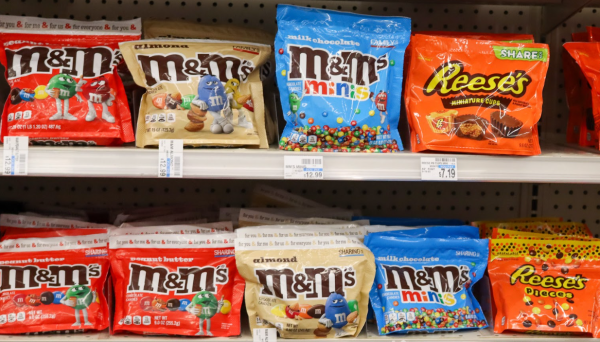
Even after feeling sick, many continue to crave sweets because high-sugar consumption activates the brain’s reward circuits by triggering the release of dopamine and endorphins, making consumers feel satisfied and rewarded.
A common misconception about high consumption of sugar and candy is that it makes one restless, energetic, impulsive, or unable to focus. However, this is a myth unsupported by scientific evidence. Local registered dietitian nutritionist Susannah Wallenstrom explains that the effects of sugar are often less about hyperactivity and more about unbalanced energy levels.
“The science has not really been clear on sugar causing hyperactivity, but sugar on an empty stomach would make blood sugar spike and then drop pretty fast, leaving the person feeling lower energy than when they began,” Wallenstrom said.
Though sugar is a large contributor to why candy is so unhealthy, there are also various additional unhealthy additives that have been linked to a range of health problems. Many ingredients found in candy sold in the United States are banned in the European Union and in other parts of the world. According to Hackensack Meridian Health, it is important to keep an eye out for Red dye No. 3, titanium dioxide, brominated vegetable oil, propylparaben and potassium bromate in candy ingredients.
Red dye No. 3 has been recently found to be linked to cancer and banned by the Food and Drug Administration, while ingredients like titanium dioxide and brominated oils have been connected to inflammation, effects on the nervous system, and other potential health risks. Though consuming large amounts of candy can cause significant harm, often teenagers are unaware of this fact and purchase items without looking at the nutrition facts on the back of each one.
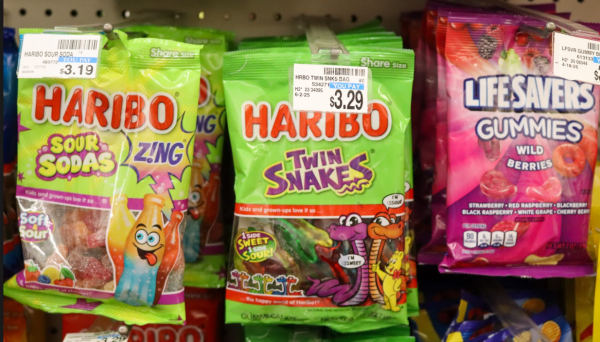
“I honestly never read candy labels because I usually just grab whatever looks good or sounds good at the moment. I know there’s probably a lot of sugar and ingredients I don’t know, but I don’t think a lot of teens really think about that when they buy candy,” said junior Paige Kelly.
Reading labels is essential to avoid these chemicals and hidden toxic ingredients. Not only that, but it is also important to have a balanced diet that contains protein, fiber, vitamins, and balanced meals to support muscle growth, performance in sports, and focus in school. It is easy to grab a sweet treat as a quick pick-me-up throughout the day, but it is important to include other, more nutrient-dense foods as well.
“What I worry about with something like candy is only that it would displace the healthy food that you actually need to grow and be healthy and have energy,” Wallenstrom said.
When candy replaces nutrient-dense foods, it acts as “empty calories,” providing a quick source of energy without the essential vitamins and minerals. Choosing balance and moderation can help ensure students have better health and higher overall energy.