
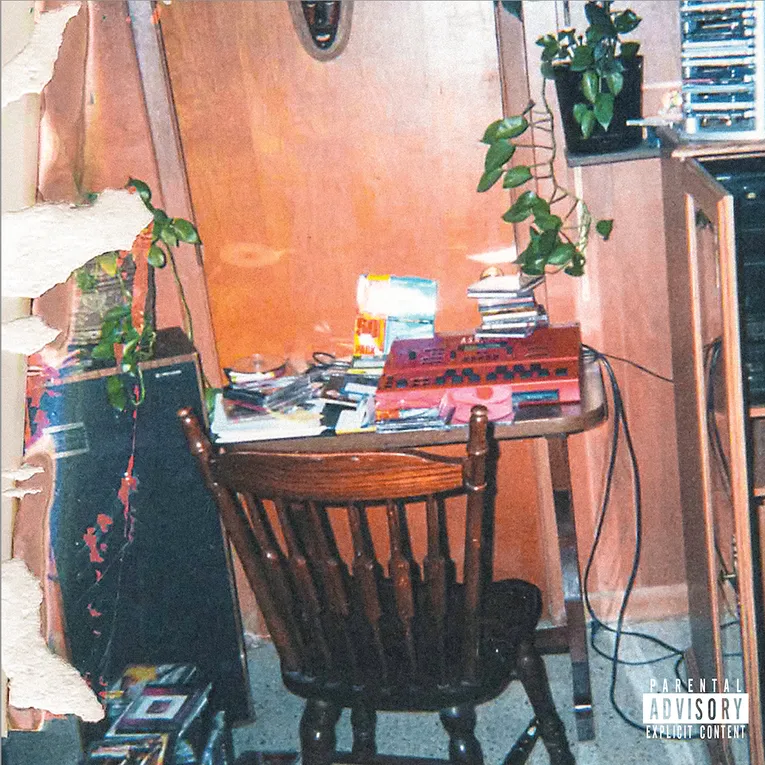
On Friday, Feb. 6, J. Cole released his highly anticipated seventh studio album, The Fall Off, a 24-track, double-disc project, framed by the changes he experienced between “29 Intro” and “39 Intro,” an acknowledgement of his growth, and recognition of the titan in the industry that he represents. Production of the album is immaculate, from bobbing your head to old school New York boom-bap and getting into your blacked-out hellcat, ready for action, listening to “Two Six”, a gritty hip hop classic. However, the one-hour and 41-minute album drags on, ultimately wearing the listener down.
J. Cole began rapping at the age of 12, around 1999, after receiving rhyming guidance from his cousin. Later, at age 15, Cole took rap more seriously, joining a local group called Bomb Shelter and began producing his own music. He released his debut mixtape, The Come Up, in 2007, which helped him sign with Jay-Z’s Roc Nation in 2009.
J. Cole states that The Fall Off acts “to do on my last what I was unable to do on my first.” This album is designed as a full circle closure to his illustrious rap career. It was written in two parts, with Cole visiting his hometown in North Carolina at ages 29 and 39, rapping about his contrasting mindsets at different stages of his journey in the two discs. Although Cole may not be completely stepping away from the rap scene, he will most likely pivot away from the album format.
The Fall Off has been hinted at since “1985 (Intro to The Fall Off)”, the final track on his 2018 album KOD. The lineup of featured artists on The Fall Off includes Future, Tems, Burna Boy, Erykah Badu, Petey Pablo, and Westside Gunn, with the album produced by Ibrahim Hamad and T-Minus.
This album isn’t a revamped version of his first album; it’s a nearly 10-year-long project. The Fall Off is a follow-up to Cole’s previous underwhelming album, Might Delete Later, with famous music critic Anthony Fantano stating, “It is subpar, which is why I’m feeling a light three on it. Have you given this thing a listen? Maybe you shouldn’t. Maybe Cole should just delete it later, like he says he will. Time to delete. Forever.” Many fans thought the album felt unfinished and rushed, but it was an appetizer for what was to come on The Fall Off.
Track one, “29 Intro,” opens with a 57-second snippet of six-time Grammy winner James Taylor’s nostalgic and comforting song, “In My Mind I’m Going to Carolina,” which abruptly ends with gunshots echoing. The juxtaposition between old country and gunshots is on par with J. Cole’s frequent antithetical approach and the repeated use of double-entendre wordplay in lyrics. Ultimately, this song illustrates J. Cole’s return to his North Carolina roots, symbolizing his homecoming and honoring fellow N.C. artist Taylor.
On track two, “Two Six,” J. Cole is spitting on a looped brass sample with a harp-like synthesizer. There is hunger in his rap and a craving that is almost unheard of from a 41-year-old with millions of dollars to his name. The song is introspective and nostalgic, reminiscing about the 90’s drug scene, contrasting with present-day “clout farming.”
Track eight, “WHO TF IZ U” uses a sample originally from The Whispers’ “Can’t Help But Love You,” later utilized in Mobb Deep’s “Drop A Gem On ’Em,” then used exactly 30 years later on J. Cole’s “Who TF Iz U.” The beat switch on this track is electric, with J. Cole shifting to a more upbeat, punchy beat from a soulful piano driven instrumental; fans on Reddit also note the distinct late-90’s “Slim Shady” esque style on the track.
According to Cole, disc 2, track one, “39 Intro” was written and recorded at 39, a full decade after writing “29 Intro.” Cole’s growth is visible in the 10-year split, lyrically impeccable amid beat switches. Cole is more confident in this than before; it’s mature, reflective, but a serendipitous “retirement.” J. Cole is drifting from stepping away and is more about standing fully in who he’s become. That same seasoned spirit is brought to track 15, “The Villest,” featuring Erykah Badu, samples Mobb Deep’s “The Realest,” but Cole strays away from Mobb Deep’s gritty vocals and leans into a lackadaisical flow while keeping his intellectual edge. Everything is smooth and polished, but on a New York beat.
Track 19, “The Man Up Above,” expresses Cole’s gratitude and acknowledges the success of his faith on his journey, recognizing that success was manifested and didn’t come only from his effort. Cole talks about being blessed, staying humble, and giving credit to “The Man Up Above” in a spiritual moment. The production is calm and serene; Cole doesn’t sound boastful, but rather placid and thankful. This song reflects the latter half of the album; this album isn’t a victory lap, it’s a juncture of self-reflection.
Track 20, “I Love Her Again,” is yet another calm, reflective track, with a smooth, soft beat guiding the production. Lyrically, the song centers on vulnerability and healing, in contrast to the confident persona Cole often projects. That crucial shift from pride to honesty gives the album balance and creates a multidimensional feel.
In an Instagram post, Cole stated, “For the past 10 years, this album has been handcrafted with one intention: a personal challenge to myself to create my best work… I had no way of knowing how much time, focus, and energy it would eventually take to achieve this, but despite the countless challenges along the way, I knew in my heart I would one day get to the finish line. I owed it first and foremost to myself. And secondly, I owed it to hip hop.”
Cole’s certainly paid his dues, and the level of devotion is clear. His lyricism consistently ascends with every release. While this album is conceptually impressive, the execution is flawed. Cole felt abnormally shallow on this album, expressing his feelings through rhyme rather than tangible care. Additionally, the album contains songs that feel like fillers for the blank space, making the project excessively long.
Regardless, this is a masterful piece of work that deserves the critical acclaim. J. Cole’s rhyme scheme and lyrical depth are the gems of the album. The double disc format is nothing but creative genius, and a mature, polished figure has emerged on the other side. The album plays like a gift to his audience; although the wrapping may be imperfect, it will be unmistakably his. This album earns four out of five feathers.