

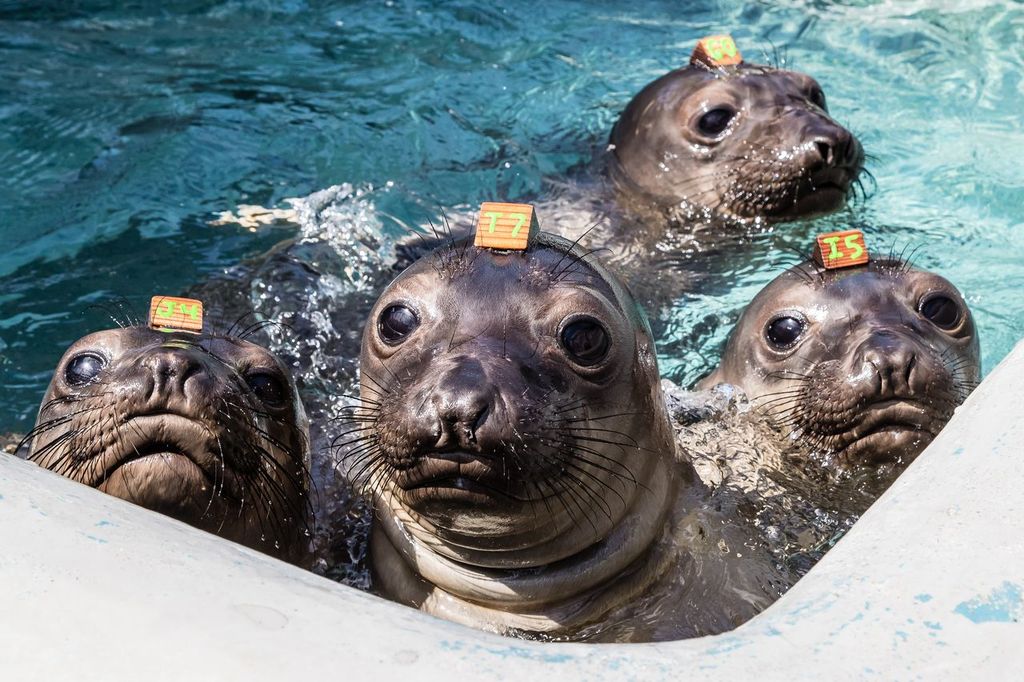
Marin County is home to the headquarters of The Marine Mammal Center, the world’s largest marine mammal hospital organization, which tends to the health of thousands of pinnipeds, otters, dolphins, and other aquatic mammals along the California coast and the Hawaiian archipelago. In 1975, Lloyd Smalley, Paul Maxwell, and Pat Arrigoni founded the Center as a localized effort to protect California’s coastal species. In the wake of their 50th anniversary, the Center has had a profound impact on marine welfare.
“[Smalley, Maxwell, and Arrigoni] met each other while working at the Louise Boyd Natural Science Museum in San Rafael, now known as WildCare. At the time, very little was known about marine mammal health and well-being,” said Krystal Krucik, Public Programs Coordinator at the Center. “They started out with three donated bathtubs from some local hotels and cared for seven patients that first year.”
Their location beside Rodeo Beach allows access to Marin’s marine wildlife. The Center also has satellite locations along the California coast and a team of volunteers in Sonoma and Mendocino that respond to marine mammals in the northernmost area of their rescue range.
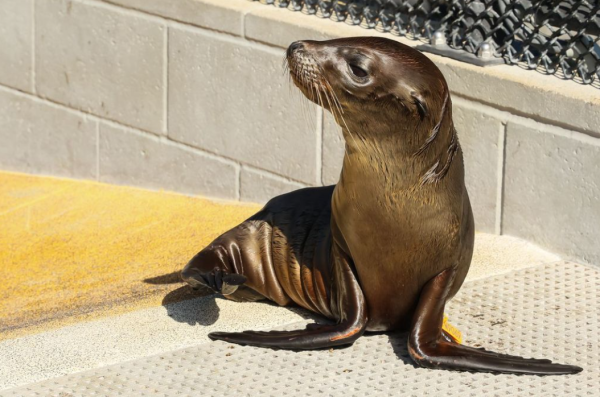
“We cover 600 miles of the California coastline, from Mendocino County down to San Luis Obispo County, and operate out on the Hawaiian Islands, where we care for the most endangered seal or sea lion in the United States, the Hawaiian monk seal. We care for anywhere from 800 to 1,800 animals every year, and as we celebrate our 50th anniversary, we have cared for over 27,000 marine mammals in need so far,” Krucik said.
Common threats to marine mammals include maternal abandonment, Leptosporosis, and domoic acid poisoning. Leptospirosis is a bacterial infection that inhibits kidney function and causes them to be unable to filter toxins or regulate hydration. Since the 1980s, the West Coast of the United States has had seasonal outbreaks of Leptospirosis, primarily putting many California sea lions at risk. Domoic acid, a neurotoxin produced from harmful algal blooms, is severely poisonous to humans and marine mammals alike, contributing to brain damage and heart failure. The toxic algae works its way up the food chain to marine mammals, where repeated exposure can prove fatal.
“The worst thing that we can do is get these animals back to health and then release them into an unhealthy ocean,” said Brenda Brinker Bottum, a volunteer at the Center.
In 2014, the Center expanded its reach from California to Hawaii, aiming to help recover the dwindling population of Hawaiian monk seals in partnership with the National Oceanic and Atmospheric Administration (NOAA).
“Nearly 30 percent of [Hawaiian monk seals] are alive today directly due to conservation efforts led by NOAA and its partners like us,” Krucik said.
In addition to rescuing and rehabilitating marine mammals, the Center does a significant amount of research, especially through necropsies, an animal autopsy, to better understand diseases and causes of death. They publish papers highlighting the ailments their patients face, informing other marine conservation organizations globally.

The Center operates as a teaching hospital, training hundreds in the standard of care for marine mammals. They also aid other marine mammal institutions in other locations around the world by both training vets at their locations and sending their own vets to locations in need of help caring for wildlife.
“We are a leading contributor to the global body of research and knowledge on marine mammal medicine and health,” Krucik said. “Through our first 50 years of research, which has been cited in scientific literature more than 2,000 times, we have learned that the fate of marine mammals is closely linked to our own. By better understanding these connections and finding solutions for the threats marine mammals face, we take action to protect our future and inspire the next generation of ocean advocates.”
The Marine Mammal Center’s Sausalito location offers a program for high schoolers called Youth Crew, in which students volunteer weekly in both animal care and public engagement for eight months. After this time, they can continue volunteering at the Center. Archie Williams alumna Peyton Price participated in the Youth Crew program beginning in 2024 and found that working with the Center was a pivotal moment in determining her future.
“The Center was the deciding factor in my college and career aspirations. I always knew I wanted to go into a science-related field, but after working with the animal care crews and seeing all the work the veterinary staff did, it inspired me to go to school for marine biology with the intention of becoming a veterinarian, specifically for marine mammals,” Price said.
Price now works at an aquarium and has an internship with the National Marine Mammal Foundation, opportunities that her work at the Center helped her get.
The Center’s work is dependent on volunteer contributions. Bottum has been involved in the Center’s work since 2021, when she served on their board of directors. She has since joined two weekly animal care crews in furtherance of her dedication to marine conservation.
“Our organization is very volunteer-driven. We have about 130 staff and about 1,300 volunteers, which is quite unusual to be so lopsided that way,” Bottum said.
Many of the issues that the Center works to combat with their patients have a broader context as policy issues. Recent proposed federal funding cuts in the 2026 fiscal year budget would impact NOAA, who authorize the Center’s work, as fewer government resources weaken the ability of the agency to conduct research. Similarly, government staff cuts have undercut NOAA’s marine research initiatives that help understand the health of migratory species as they cross state lines, and the protection of sanctuaries impacting endangered species. Additionally, four proposed Trump administration rules threaten the 1973 Endangered Species Protection Act. In this context, the Center expands its work from targeted veterinary responses and research to advocacy as well.
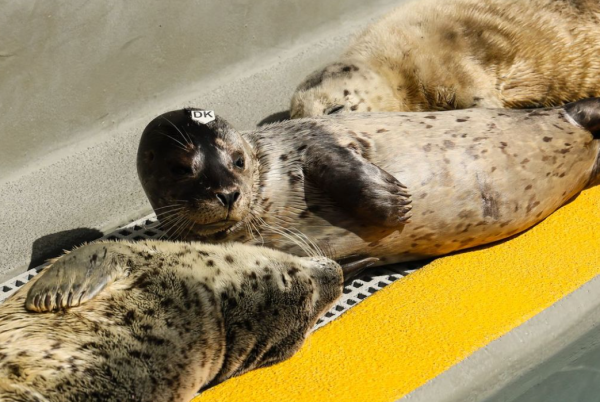
“With [our] research, [The Marine Mammals Center] acts as the scientific backing for advocacy groups to initiate change. We work with government agencies as major partners in our work…The Center has created resources to support the public in contacting their representatives about proposed cuts to the Marine Mammal Protection Act and the Endangered Species Act,” Krucik said.
The Center works to educate the community on marine mammal conservation, offering tours, educational events, online resources, and more.
“The primary way the Center protects marine health is education. While yes, it is important to help the mammals that are currently impacted by the effects of climate change, like domoic acid or leptospirosis, we also want to take preventative measures to address this issue, not just reactive,” Price said. “Every person who walks in is guaranteed to walk out learning something new, and I think that is really powerful.”
Bottum finds that although some may not feel as connected to the work of the Center, everyone has some connection.
“I always say to people, even if you don’t eat fish, but you love being around [the ocean], you should care. If the oceans are unhealthy, it potentially impacts us, so everybody should be concerned about the animals, what’s happening to them, and what’s happening to the oceans,” Bottum said.
Throughout its 50 years of work dedicated to protecting marine mammals, The Marine Mammal Center has had a significant impact. They aim to continue this work and serve marine mammals all around the world through rescue, rehabilitation, release, and research.
“The Marine Mammal Center’s approach to marine conservation is multifaceted…from all areas of the Center, we are working to advance ocean conservation,” Krucik said. “We are an incredibly special place. We lead with animal welfare but work to inspire change at all levels, from the individual to the policy level to protect the ocean and the marine mammals within it.”