


Jan. 26, 2020, marked the first confirmed case of COVID-19 in California, and by Feb. 6, 2020, California experienced its first COVID-19-related death. On March 13, 2020, the federal government declared a nationwide emergency, Marin had three confirmed cases, and the Tamalpais Union High School District (TUHSD) announced school closures until March 30, 2020.
For Archie Williams, two weeks turned into nearly an entire year, as officials repeatedly pushed back students’ return to school due to the risk of infection. Students continued their education remotely until March 2, 2021, when some returned to a cohort-based hybrid learning model. This unprecedented time period affected every community, family, and individual, with over 704 million total cases and seven million deaths worldwide. Even as the calendar strikes five years since the onset of lockdowns, Archie Williams still faces the enduring consequences, and they aren’t going anywhere.
From March 16, 2020, to April 13, 2021, when Archie Williams fully returned to in-person classes, teachers had to adapt and deliver educational content to students virtually, using platforms like Zoom, Google Meet, and Google Classroom. This presented a multitude of difficulties, inevitably impacting student engagement and performance, leading the TUHSD to adopt a pass-fail grading system for the 2020 spring semester.
For teachers, the technological conversion was complex, but their ability to adapt was substantial. Archie Williams teacher of 25 years, Jasper Thelin, recalls this on-the-fly adjustment.
“I was impressed with the district and the school’s ability to shift into online mode, even though it wasn’t fun,” Thelin said.

By April 13, 2020, a formal meeting schedule was in place for classes during the week, as teachers and administrators quickly realized the importance of structure for students and teachers. The result was hundreds of online classes, where teachers from every subject struggled to engage a gallery of students with their cameras off, some of whom were undoubtedly asleep or in another room altogether.
Archie Williams freshman Julina Loose, who was in fourth grade at the time, remembers struggling to learn and stay motivated during the pandemic due to teachers’ inability to discipline students virtually.
“I missed a whole year of school basically… when I was on Zoom, I didn’t do anything, I just turned off my camera and would go do something else,” Julina said.
Online learning made it harder for teachers to gauge student understanding and help them one-on-one, resulting in missed content and curriculum. Depending on grade level in 2020, students developed deficiencies of different sizes in different areas, with some subjects being harder to learn online than others.
“Math [was the hardest subject for me], because [my teacher] was not there to actually show me how to do [the work], visually,” Julina said.
While teaching the art elective Drawing and Painting in 2020, Thelin felt the absence of student presence and the challenge of reaching students.
“The few kids who would keep their camera on [were] like this lifeline, this umbilicus to engagement… because otherwise, it felt like you were teaching into a void,” Thelin said.
Because they didn’t attend in-person school, students missed peer-to-peer social interactions and face-to-face teaching, leading to social and emotional deficits. According to a 2023 report by the National Institute of Health, teens were “particularly at risk for the isolation caused by the pandemic because social interaction is an integral part of adolescent development and they rely heavily on peers and social interactions for emotional support.”

Worldwide lockdowns restricted access to the outdoors, inhibiting students’ ability to participate in everyday extracurricular activities. For Archie Williams senior Jack Evans, the resulting shift in routine was the hardest part of the pandemic.
“I like being active, and that’s really good for my mental health, and so when I wasn’t going outside much and not getting my regular activity in, then that routine kind of messed up a lot of my academic flow,” Jack said.
For the students who showed up to Zoom classes, expectations were dramatically different. Deadlines were looser, and extenuating circumstances arose right and left, leading to a shift in academic culture that proved problematic when students returned to school.
“It was a little bit of an adjustment at first, [although] it was right away much better [than online school], “Jack said. “I’d say the biggest thing was just getting used to meeting deadlines and getting in the habit of having due dates that I actually need to follow through on and classes that I need to regularly show up to, no matter how I feel, that skill was a little bit lost during COVID.”
While completion of the 2024-25 school year will mark the fourth uninterrupted school year since the shutdowns, teachers and students are still trying to shake the influence COVID-19.
“I still see a lot of kids in my non-AP classes that have really no idea how to meet deadlines or do any substantial amount of work. Attention spans on average seem pretty low, [same with the] ability to focus on something for more than 20 minutes,” Jack said. “A lot of kids seem to complain about pretty reasonable due dates or assignments that aren’t that bad, they’re just maybe not used to doing [work on time] because of COVID.”
Thelin, who currently teaches drama, art, and Leadership within the Team Academy, observes similar problematic attitudes from students within his classes.
“Even though the universal past grading system was good [at the time]… it also meant students didn’t have to do work and have deadlines or be accountable to their work, and nowadays it’s really as if when there’s a deadline students, almost universally, treat it as if it’s just a recommendation,” Thelin said.
However, Thelin believes that issues around student engagement were not caused by the pandemic, but rather exacerbated by it.
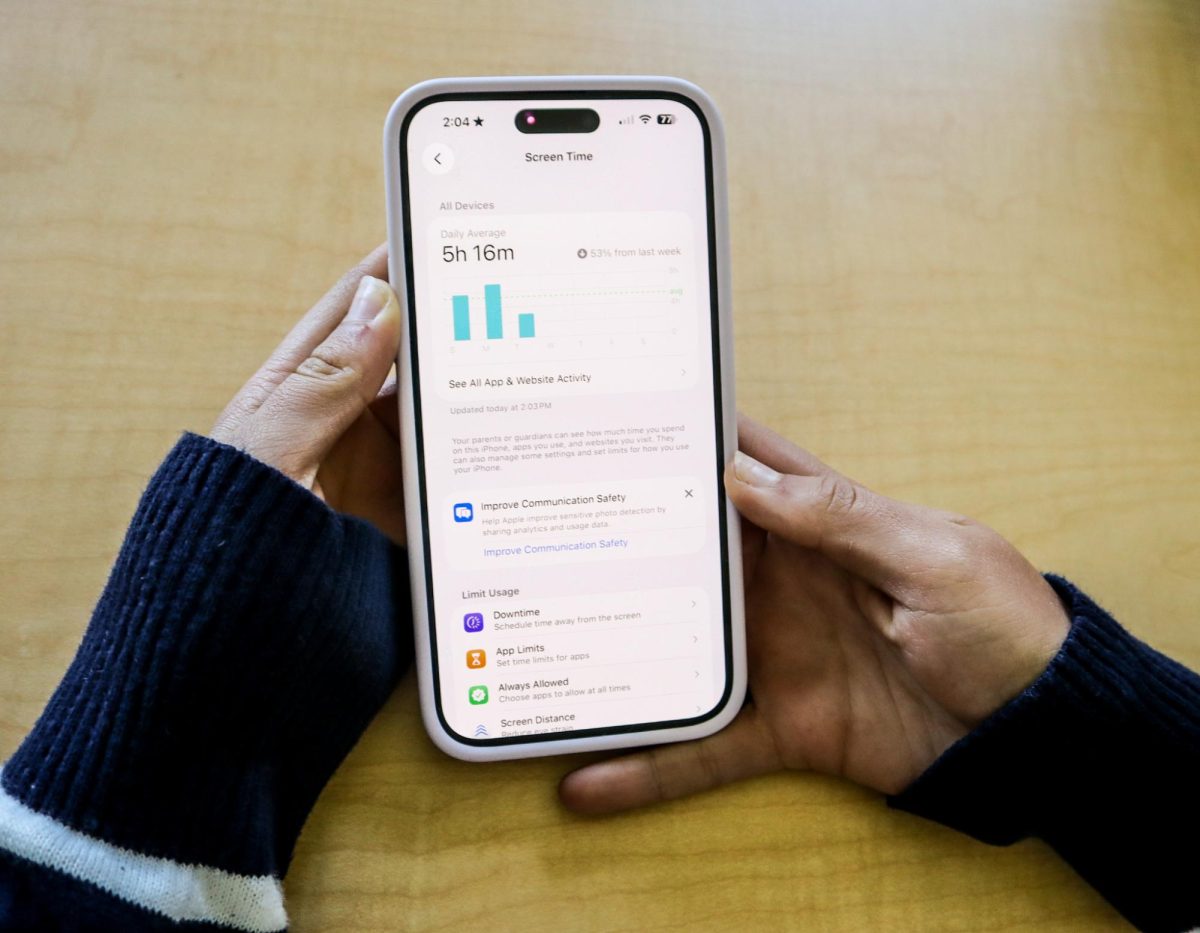
“That mix of the ‘screenager’ issue, with the pandemic forcing everybody to be more isolated and on screens even more, is the combination that has caused students to be more disengaged, and harder to get them to care about what’s going on in school. We’re still seeing the after-effects of that for sure,” Thelin said.

The pandemic’s impact on student learning is present in state-wide test scores as well: EdSource reports that “English and math scores improved from 2023 to 2024, but still have not caught up to results from prior to the pandemic.” Online schooling presented a significant hurdle in social and academic development for students, and the full effect of COVID-19 is still unknown.
For now, Jack believes that motivated students have been able to recover fully, exemplifying the importance of student accountability and self-driven learning.
“Generally, the kids who want to be on track have been able to snap out of the COVID slump, and the kids who don’t have kind of have been able to use it as an excuse,” Jack said.
Thelin believes that our routines will eventually recover and all students can overcome the challenges presented by the pandemic.
“I’m utterly confident in students’ abilities to recover and re-engage. The human being’s superpower is our flexibility… and so I’m confident in the ability for people to recover and thrive post-pandemic,” Thelin said.
In another five years, students who had not yet entered kindergarten when the pandemic hit will be freshmen in high school. While COVID-19’s legacy will soon age out of Archie Williams, its impact on current students and staff still needs addressing.
“I really wonder what age was the worst age developmentally to go through a year of being separated from your peers? I don’t know the answer, but I know it affected everybody in big ways… What will history look back on and see?” Thelin said.