


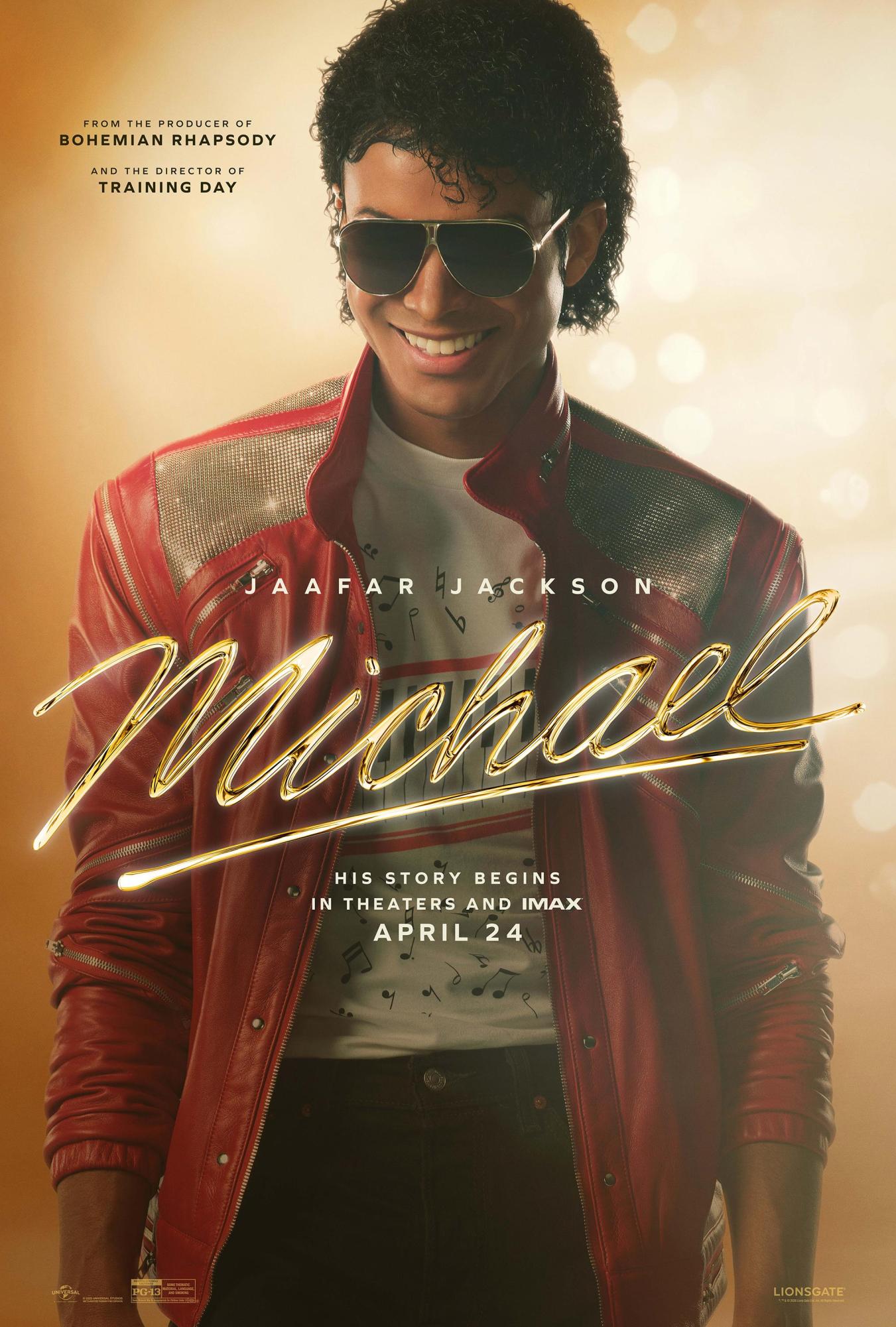
Michael premiered in theaters Saturday, April 18, with huge anticipation from Moonwalkers worldwide. This film dives into the life of Michael Jackson, with a standout personal casting choice: Jackson is played by his own nephew, Jaafar Jackson. Although this film doesn’t cover the entirety of Jackson’s career, it focuses on his rise to fame, framing his story as a dazzling success.
The film begins by highlighting Jackson’s childhood role in the Jackson 5, the Jackson family band, establishing the tension, talent, and pressure he faced as the youngest member of the group. As the group’s lead singer, Jackson was pushed to perfection by his father, Joe Jackson (Colman Domingo), whose discipline borders on emotional and physical abuse. The early scenes of the movie lay out the exhausting machinery behind the family’s success, as each rehearsal and performance plants internal seeds of conflict in Jackson’s head.
Although the archetype of a troubled child prodigy is familiar, Michael focuses more on admiring his career successes rather than critiquing his theme, shedding a refreshing light on the inner workings of Hollywood. As Jackson grows, so does his career, which ultimately leads him to take on the role of a star and step away from the Jackson 5. This transition develops the backbone of the movie, fueling the internal conflict of Jackson choosing between his family and his independence. Eventually, Jackson separates from his father, creating a resolution that feels unusually smooth… or rather staged.
This shift segues to Jackson’s solo career, highlighting his iconic album Thriller. As the production team recreates each music video scene, the choreography, prosthetics, and 80s costume designs immerse the audience in a visually striking capture of the time period’s aesthetic. Full-length song performances from hits like “ABC,” “Bad” and “Billie Jean” further elevate the film, creating a concert-like atmosphere.
Despite the visual and cultural appeal, the film lacks unique cinematography and technical innovation. However, this is somewhat made up for by the vibrant and stylized atmosphere, perfectly depicting the peak of Jackson’s years. Throughout the film, audiences closely follow Jackson, but it feels as if viewers are observing him rather than understanding him, adding a documentary-like aspect.
This observational viewpoint is a notable weak point in the film because it allows Jackson to maintain a mysterious persona throughout, limiting the audience’s emotional access to him. It feels as though the camera is following behind him, capturing public moments without further unpacking them. As a result, the film leaves little insight into who Jackson is behind his image.
From childhood to adulthood, producers emphasized a narrative of Jackson’s loneliness. Jackson never seems to quite fit in, which leads him to rely on his pets for companionship due to his isolation and difficulties forming genuine human connections. This leaves audiences to believe that his many cosmetic procedures, such as a rhinoplasty, weren’t done for aesthetic purposes but rather for a desire to be accepted and meet the world’s standards.
The film’s tone as a celebration rather than a critical biography limits its storytelling aspect, avoiding addressing the more controversial and complex aspects of his life, then cutting the film at the peak of his success. This paints Jackson as a reliable and innocent star, reliving his accomplishments and skipping over his mistakes. This uplifting spin allows for an enjoyable experience, but also minimizes the film’s nuanced portrayal of Jackson.
Michael perfectly encapsulates the exciting feeling of the “Michael Jackson era,” featuring stunning performances and giving the audience a look at his creative process. With a beautiful soundtrack, the audience is taken on a cinematic journey through Jackson’s triumphs. However, keeping the focus on Jackson’s success alone makes the movie feel surface-level and almost like a commercial. Although Michael is a beautifully made and inspiring movie, ignoring the gritty and unattractive parts of his life doesn’t fully tell his story, earning Michael three out of five stars.