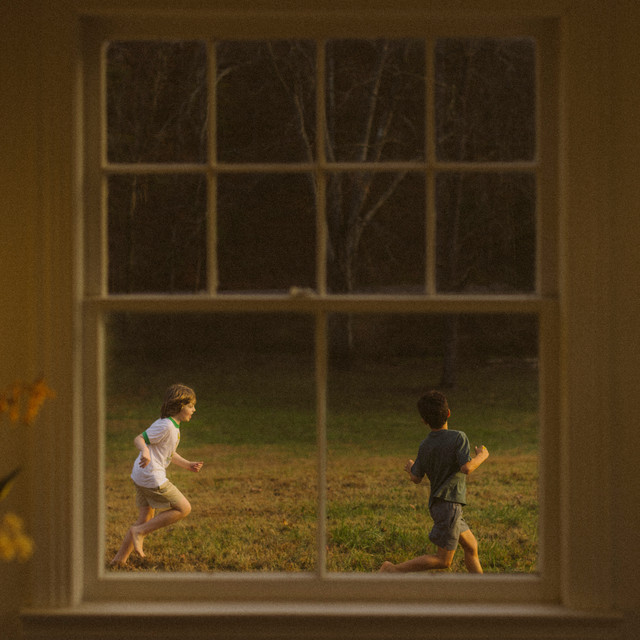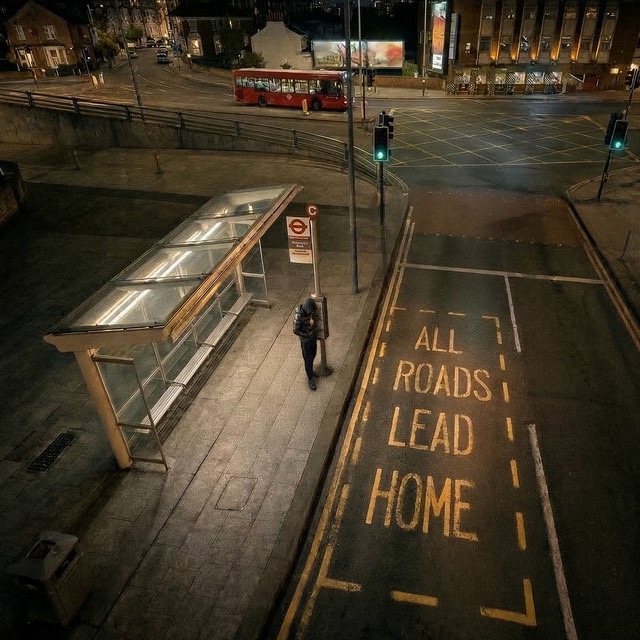


From Thursday, Oct. 2, to Sunday, Oct. 12, movie theaters across Marin County hosted the 48th annual Mill Valley Film Festival (MVFF48), showcasing a wide range of independent and foreign films. The festival draws international acclaim and large numbers of moviegoers every year, offering unforgettable films and a more personal atmosphere than the average cinema experience. This review covers two foreign language films screened at MVFF48: Orphan and Children in the Fire.
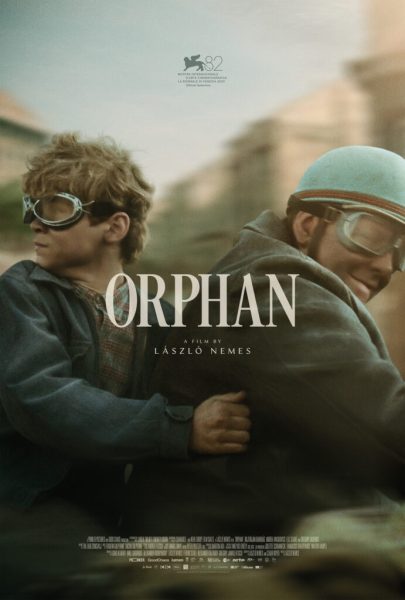
Orphan, released Thursday, Aug. 28, directed by Academy Award-winning filmmaker László Nemes, is an evocative coming-of-age tale set in post-war Budapest, 1957. The film is centered around young Andor (Bojtorján Barabas), who clings to the myth of his deceased “father,” who in reality is solely his mother’s late husband, not his biological parent. Andor, unaware of this information, refuses to accept his biological father as his own, convinced that the man now in his life is simply usurping the position that his true father once held.
When Mihály (Grégory Gadebois), a paunchy butcher, shows up at the door, claiming to be Andor’s father, Andor is left bewildered. As the plot unfolds, Andor discovers that Mihály is indeed his biological father, and that his mother created a facade to protect Andor from the truth; that Mihály is an abusive communist, far from an ideal father figure.
Andor faces antisemitism along his journey. On multiple occasions, other kids his age persecute him based on his religion. His personal struggle to come to terms with his father’s identity reveals how opaqueness from parents can easily lead children away from reality, as Andor goes to great lengths to rationalize his personal truth.
Symbolism is prominent in Orphan. Throughout the film, red and white balloons appear in various locations; red symbolizing communism and the Bolsheviks, and white symbolizing the distributed anti-communist propaganda within the Soviet bloc, which in turn is connected to resistance and foreign hope.
In the climactic closing scene, Mihály and Andor ride a Ferris wheel with a five‑pointed red star in its spokes. This star is often politically associated with the USSR, but the Ferris wheel clashes with the symbol of communism, as a Ferris wheel represents innocence and joy, creating an image of hope that contrasts with the film’s xenophobic, fearful backstory.
“Orphan is the chronicle of a child’s coming to terms with his own family history and his own self, both reflective of the turmoils of the 20th century in the heart of Europe,” Nemes said in a director’s statement from the Hollywood Reporter.
Nemes also reflected on his personal history application to this film, stating, “My own family’s story served as a canvas for Orphan.” Nemes feels that this film has reverberated throughout much of his existence, comparing it to the storyline of William Shakespeare’s Hamlet.
Orphan is a cinematic masterpiece, giving viewers insight into the world of post-war trauma and allowing viewers to experience life through the eyes of a 12-year-old Jewish boy struggling to navigate life’s challenges. Orphan is unfiltered, intense, and provocative, earning four and a half out of five feathers.
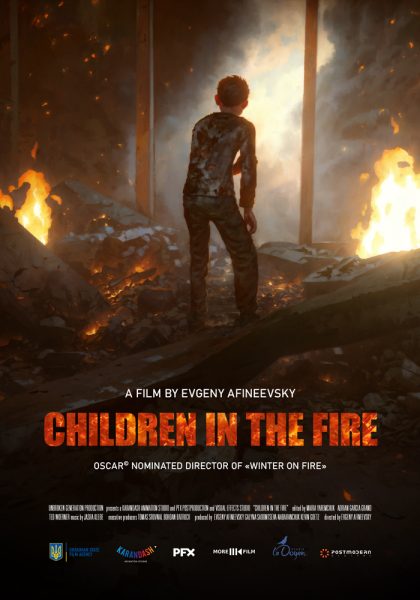
While Orphan is a fictional film rooted in national conflict, personal struggle, and chaos, Children in the Fire brings these intense themes to reality. Children in the Fire, which made its North American premiere Saturday, Oct. 11 at MVFF48, is a visceral, emotional documentary about the Ukrainian children living through the Russia-Ukraine war.
The film puts viewers in the shoes of children living in a war zone, telling stories through a blend of live-action footage and animated scenes that depict the children’s lived experiences. Children in the Fire is directed by Emmy and Oscar nominee Evgeny Afineevsky, a Russian-born American who is known for his extensive documentary work, including Winter on Fire (2015) and Freedom on Fire (2022), which both focus on geopolitical conflicts within Ukraine.
The film contains heartwrenching and disturbing moments, but also carries an underlying sense of hope and strength. Audiences hear about the experiences of young Ukrainians and how they have endured great hardships and persevered after such life-altering events. Highly detailed animations depict the children’s first-hand retelling of events. Afineevsky did this to give life to the stories while keeping them digestible to the average viewer, who may not be accustomed to seeing real footage of war.
One story from the documentary that sticks out was when Yana, a 12-year-old Ukrainian girl, was grievously injured in a Russian missile strike. An animation depicted Yana and her mother at a train station when a missile hit nearby. She was dazed and subject to the pure chaos around her: thick smoke, people screaming, and wreckage. Volunteer first responders then rushed her to a hospital, where her wounds were so bad that both of her legs had to be amputated below the knee, and she had to be transferred to a hospital in San Diego, over 6,000 miles from home.
However, these tragic events didn’t snuff out Yana’s spirit, nor her will; she spent months rehabilitating, building herself back up physically and mentally. She relearned how to walk with new prosthetics and eventually became comfortable with her new reality. Yana found a new passion for running and, with her prosthetic running blades, ran a 5k at the Boston Marathon.
Stories like the ones told in Children in the Fire, ones that show the darkest moments in these people’s lives, followed by how they recover and continue to persevere, are extremely poignant when watching Children in the Fire. There are repeated moments during the film where viewers might want to look away, when the audience feels the despair and angst that these children felt, but gets drawn back in due to how well Afineevsky presents these accounts.
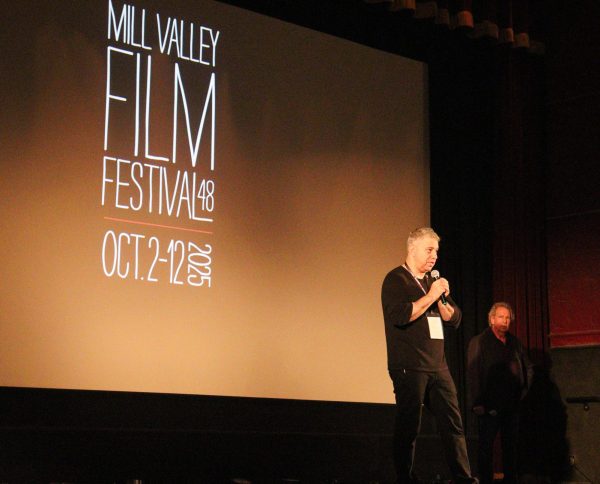
Afineevsky himself had moments when he carried so much emotional weight that he thought he would not be able to continue producing the documentary, but the children he was documenting encouraged him to keep going.
“I remember how, after the first few interviews, I called [one of the children in the documentary] Anya. She was the baby under the rubble in Mariupol. I called her and I said, ‘Anya, I don’t think I’ll be able to make this movie, I’m just emotionally not ready. I just feel that every story is deeply impacting me to where I cannot put myself together after,” Afineevsky said.
Anya told him to look at how strong and resilient the children are, and that he had to keep going for them.
After viewing Children in the Fire, viewers emerge with an entirely new perspective on the conflict; it opens their eyes to the effects of war and whose lives it impacts. The film powerfully amplifies these children’s voices and urges action to end the violence in Ukraine. The emotional insight, captivating animations, and uncensored accounts from real survivors of the conflict give Children in the Fire five out of five feathers.
The experience at MVFF48 was one of a kind, and the opportunity to see new and under-the-radar movies was extremely enjoyable. MVFF is set to return for the 49th festival next year in October 2026, and it’s worth the ticket as it’s guaranteed to feature a wide variety of exclusive and intriguing films.